Creating a personal finance app has transformed how people manage money. These apps help users track spending, plan budgets, and reach financial goals efficiently. Understanding how personal finance app development works ensures your app meets user needs and stays competitive.
1. Product Discovery
The first step in creating a finance app involves understanding the market and your target audience. Research reduces risks and ensures your app addresses real financial challenges.
This phase includes studying competitors, identifying market trends, and analyzing user behavior. Surveys and interviews help uncover pain points, motivations, and preferences. Developing user personas and journey maps clarifies how different groups will interact with the app. Documentation should capture the app’s goals, scope, and technical requirements, giving the design team a clear direction.
2. App Design
Design is essential in personal finance app development because it builds trust and encourages engagement. Visual elements and layout must convey reliability, while the interface should remain intuitive. Emotional design, like progress indicators and gamified rewards, motivates users to save and manage finances consistently.
Key design elements include login screens, profile pages, expense tracking, card details, and secure verification. Privacy and security cues, such as icons or encryption indicators, help users feel safe. Accessibility features, including high-contrast text, readable fonts, and compatibility with screen readers, make the app usable for everyone.
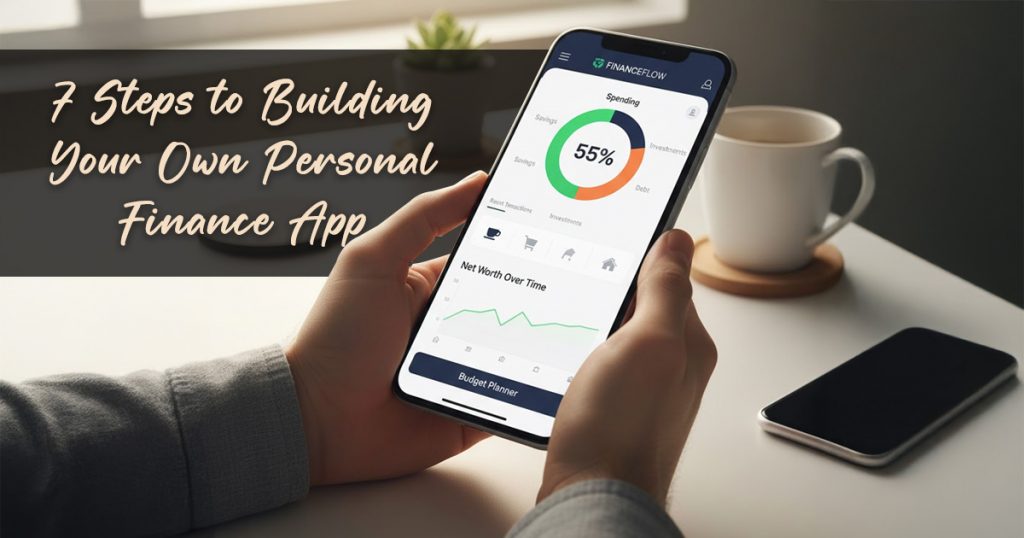
Gamification and visual dashboards can turn budget management into a motivating experience. Users respond well to clear visualizations that guide them through savings goals, spending limits, and debt reduction.
3. System Architecture
System architecture defines how a personal finance app handles data, integrates features, and scales with users. A strong technical foundation ensures fast performance, resilience, and compliance with security regulations.
The architecture should support:
- Modular design for easy expansion and new feature implementation
- Integration with payment systems and analytics APIs
- Reliable backend frameworks and databases
- Cloud hosting and DevOps infrastructure
A scalable and secure architecture guarantees consistent app performance, even under heavy usage.
4. Engineering
Engineering brings the app to life. Developers implement core functionality, integrate external banking services, and connect analytics systems. Collaboration between designers, engineers, and product managers ensures seamless user experiences.
Tech stacks often include React Native for mobile apps, Node.js for backend services, and PostgreSQL or MongoDB for secure data storage. Cloud providers like Amazon Web Services ensure reliable hosting and performance. Regular collaboration and iterative testing improve the app’s quality, speed, and reliability.
5. Testing and Quality Assurance
Testing is critical because personal finance apps handle sensitive information. A comprehensive QA process ensures reliability, usability, and security.
This stage benefits from bullet points because multiple complex checks are involved:
- Data synchronization across devices
- Transaction accuracy and fraud detection
- Accessibility testing for visually impaired users
- Performance under heavy traffic
- Security audits and session management
Thorough testing protects user data, improves trust, and reduces technical issues after launch.
6. Launch and Post-Launch Support
Launching a personal finance app requires careful preparation. Servers must be ready, app stores configured, and integration systems activated. Post-launch support ensures continued stability and user satisfaction.
Support includes technical assistance, monitoring usage analytics, fixing bugs, and updating security features. Continuous improvement keeps the app competitive and responsive to evolving user needs. Monetization and user engagement strategies can also be implemented as feedback is gathered from early users.
7. Core Features and Personalization
A personal finance app’s success depends on the features it provides and how personalized the experience feels. Basic functions like income and expense tracking, budget planning, and financial reports are essential. Advanced features such as AI-driven recommendations and gamification increase engagement.
Bullet points highlight the most impactful features without overwhelming the text:
- AI-based insights and dynamic dashboards
- Gamified rewards and achievement systems
- Personalized notifications and reminders
- Integrated banking and payment tools
- Intelligent search for transactions and receipts
Tailoring the app to individual users makes it more useful and increases long-term engagement.
Designing Financial Confidence
Creating a personal finance app is more than coding and design; it’s about helping users gain control over their money. Thoughtful design, strong architecture, clear features, and ongoing support transform the app into a financial partner. Security, usability, and personalization create trust, allowing users to confidently manage spending, achieve savings goals, and build financial resilience.