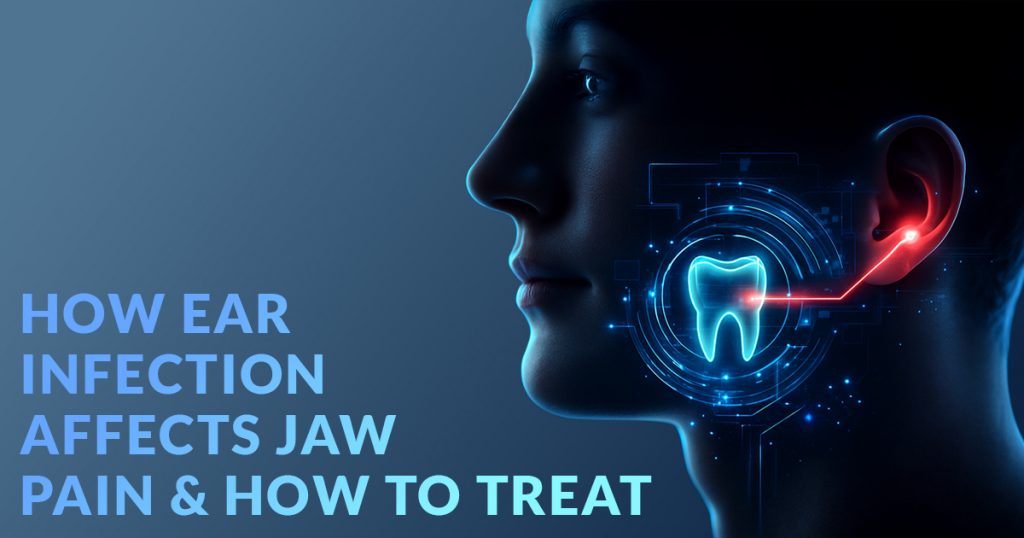
Ear pain is uncomfortable on its own, and when jaw pain slips in as well, the whole situation can feel a bit more irritating than you’d expect. Sometimes the ache drifts from the ear to the jaw and even down toward the throat. You might find yourself wondering what’s going on. Can an ear infection cause jaw pain? Yes. These areas sit close together and share nerves, so irritation in one spot can nudge the next into reacting too.
Here’s a closer look at why that happens, what else might be behind the discomfort, and a few ways you can ease some of it at home or with support from a clinician.
Why Ear Infections Can Affect the Jaw
The ear and jaw share nerve pathways, so inflammation in the ear can send pain toward the jaw without much warning. When only one ear is involved, the discomfort tends to stay on that side, which can feel oddly specific.
Outer ear infections often cause the sharpest sting for adults. Irritated tissues near the ear can set off nearby nerves, which is why chewing or even light pressure can make the pain flare. You may also notice stiffness around the jaw, almost like the muscles are tightening in response.
The middle ear connects to the throat through the Eustachian tubes. These passages help drain fluid and manage pressure. When they clog during an infection, pressure builds up and travels toward the jaw or throat. You’ll notice this most during colds, allergy flare-ups, or sinus congestion.
Of course, jaw and ear pain aren’t always linked to infection. TMJ disorders can feel nearly identical because the joint sits right in front of the ear. Grinding your teeth, arthritis, jaw misalignment, stress, or old injuries can irritate the joint and create that familiar deep ache.
Conditions That Can Cause Jaw and Ear Pain
A handful of issues can involve both areas, which explains why the symptoms can be tricky to sort out.
TMJ Disorders
TMJ problems often bring discomfort to the jaw, the ear, or both. Clicking, headaches, trouble chewing, or pain that sharpens with movement are common clues. Grinding, stress, arthritis, or alignment issues can contribute.
Teeth Grinding
Grinding or clenching strains the jaw muscles. That tension may climb toward the ear and create a slow, steady ache. Many people notice it only after waking up with sore muscles or sensitive teeth.
Sternocleidomastoid Strain
This long muscle runs from the collarbone to the area under the ear. When strained, it can send pain into the jaw, the ear, or even the sinuses. It doesn’t need an infection to misbehave.
Oral Infections
A tooth abscess or gum infection can radiate pain toward the jaw or ear. Swelling, fever, temperature sensitivity, or redness inside the mouth often appears early. Sometimes the tooth pain eases as the infection spreads, making the source harder to spot.
Sinus Issues
Sinus infections create pressure in the cheeks and upper teeth. That pressure can drift into the jaw and mimic an ear problem.
Jaw Injuries
A fall or direct hit can irritate the jaw joint or nearby muscles. Even small injuries can make chewing, talking, or opening your mouth uncomfortable.
Ear Infection Symptoms That May Affect the Jaw
Ear infections feel different for everyone. Some people notice sharp pain, while others feel a slower throb. Symptoms may include:
- Pain moving from the ear to the jaw, throat, teeth, or head
- Fever or congestion
- Muffled or reduced hearing
- Low energy
- Fluid draining from the ear in more advanced cases
Outer ear infections usually hurt more when the jaw moves or the ear is touched. Middle ear infections appear more often in kids but can still happen in adults.
How To Ease Jaw and Ear Pain at Home
When symptoms are mild and there’s no sign of infection or injury, home care often helps. A few options you can try:
- Wearing a night guard if grinding is an issue
- Using heat or ice to relax tense muscles
- Gently massaging the jaw
- Taking NSAIDs for relief
- Stretching the jaw and neck
Keeping the ears dry helps too. Avoid Q-tips inside the canal since they can irritate the skin. Swimmers often find drying drops useful after being in the water.
If you’re unsure what’s causing the pain, go slow with home remedies. Oils or diluted vinegar should only be used after proper guidance.
When Medical Treatment Is Needed
Bacterial ear infections often require antibiotics, though some cases are monitored first. More serious infections, such as mastoiditis, need urgent care.
Treatment depends on the cause and may include:
- Orthodontic adjustments
- TMJ surgery for severe cases
- Custom night guards
- Support for anxiety when clenching is stress-related
- Medication for arthritis
- Physical therapy for TMJ or jaw injuries
- Dental procedures for cavities, abscesses, or gum disease
A correct diagnosis matters. TMJ issues and ear infections can resemble each other closely, so an ENT or dentist can help pinpoint the real source.
Seek help if the pain becomes severe, swelling appears, fever rises, or symptoms don’t improve after a few days. Get checked sooner if chewing becomes difficult or the discomfort feels different from past episodes.
Moving Toward Relief and Long-Term Comfort
Jaw and ear pain can interrupt your day, but early care often brings relief sooner than you’d expect. Understanding how the two areas connect helps the symptoms feel less confusing. Can an ear infection make your jaw hurt? Yes, and those shared nerves explain why the pain spreads so easily.
Acting early reduces the chance of complications. If the discomfort keeps returning or starts spreading, a professional checkup is the safest next step.