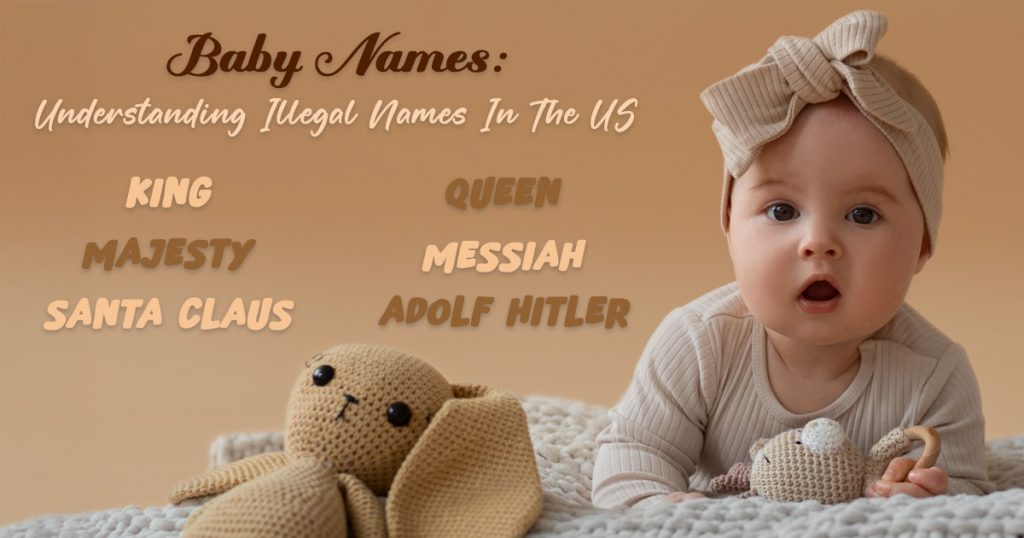
Choosing a baby name can feel exciting and overwhelming. Parents want something unique, meaningful, and memorable. Although the United States is generally relaxed about naming, certain names are not allowed in many states, and breaking these rules can complicate birth registration. Knowing about illegal baby names in America ensures your child receives a name that complies with state laws.
What Makes a Name Illegal in the US
Illegal names in the US usually fall into a few categories. Names containing numbers, symbols, or emojis often get rejected. Examples include:
- Mon1ka
- @
- R2-D2
States generally limit characters on birth certificates, so names exceeding the maximum allowed length may also be disallowed. First and middle names in New York, for instance, cannot exceed 30 characters, while last names cannot go beyond 40. Texas allows 100 characters for first and middle names, and Arizona caps the total name length at 141 characters. These rules prevent administrative issues and ensure that the state systems can properly record the child’s information.
Offensive language or obscenities are another reason names may be rejected. Certain words could cause harm, ridicule, or embarrassment for the child. Courts occasionally step in to prevent names that might negatively affect a child’s well-being. Titles, ranks, or official designations are often prohibited as well. Names like King, Queen, and Majesty are not allowed in many states because they may cause confusion or appear misleading.
Some exceptions exist. Hawaii and Alaska permit special characters in names from indigenous languages. North Carolina allows tildes in names, while Virginia bans them. Illinois has very relaxed rules and may allow numbers or symbols. These differences illustrate how state laws affect what names are legal.
Examples of Illegal Names in the US
Several names have been challenged or ruled illegal across different states. Examples of illegal baby names in America include
- King
- Queen
- Majesty
- Santa Claus
- III
- Jesus Christ
- Messiah
- Adolf Hitler
- Nutella
- @
- 1069
- Baby Girl / Baby Boy
- Male / Female
- Test/Void
Certain numbers and symbols cannot be part of a name. For example, 1069 has been rejected in North Dakota, Minnesota, and California. Symbols like @ are not allowed in most states. These rules help maintain clarity in government records and avoid complications for identification purposes.
State-Specific Naming Rules
Understanding how states differ in rules helps parents choose a legal name. Examples include:
- California prohibits non-English letters but allows hyphens and apostrophes.
- New York limits first and middle names to 30 characters and last names to 40.
- Texas allows long names but restricts formatting.
- Florida assigns a name through the court if parents fail to sign a legal document agreeing to the chosen name.
- Mississippi automatically gives the child the father’s last name unless the parents request otherwise.
- Louisiana assigns the mother’s last name if she isn’t married within 300 days of birth.
These differences show how parents must check local laws before naming a child. Legal restrictions exist to prevent errors, confusion, or issues that may affect the child later in life.
International Comparisons
While illegal name rules in the USA vary across states, other countries often impose stricter regulations. Examples of banned names worldwide include
- Germany: Adolf, Osama bin Laden
- Sweden: Metallica, BRFXXCCXXMNPCCCCLLLMMNPRXVCLMNCKSSQLBB11116, IKEA
- Switzerland: Judas
- Portugal: Thor, Tom
- Italy: Friday, Blue
- France: Prince William, Griezmann Mbappe
- Iceland: Harriet, Camilla
- Japan: Akuma (Devil)
- Malaysia: 007, Snake
- China: Islam, Quran
- New Zealand: Sex Fruit, Talula Does the Hula, Anal
- Australia: Duke, President, Brother, Sister
- Mexico: Robocop, Circumcision
Strict international rules often exist to protect the child’s welfare, prevent offense, or maintain cultural norms. Many countries require parents to pick from pre-approved lists or petition for unique names.
How to Choose a Unique Yet Legal Name
Parents can still be creative while avoiding illegal names in America. Tips include:
- Avoid numbers, symbols, and emojis.
- Steer clear of titles and ranks that could be rejected.
- Keep the name manageable in length to comply with state character limits.
- Consider how the name sounds in social and professional settings.
- Test names with friends and family to ensure they won’t cause confusion or embarrassment.
Parents should also research their state’s specific rules before finalizing a name. Even unusual or rare names can be legal if they follow formatting and character guidelines. Checking regulations prevents potential court challenges or administrative errors.
Naming with Care and Creativity
Understanding illegal names to name your child in the US allows parents to balance creativity with compliance. Restrictions exist to prevent future hardships, confusion, or legal challenges, but they do not eliminate the possibility of originality. Creative approaches like alternative spellings or combining letters legally can produce distinctive names that remain acceptable.
Choosing a name is a long-term decision that affects a child’s social, academic, and professional life. Following state laws ensures the name is recognized legally and avoids unnecessary complications. Parents who consider rules and potential social impacts can select names that stand out for the right reasons.